|
 |
| Protect Exposed Natural Gas Pipelines |
|
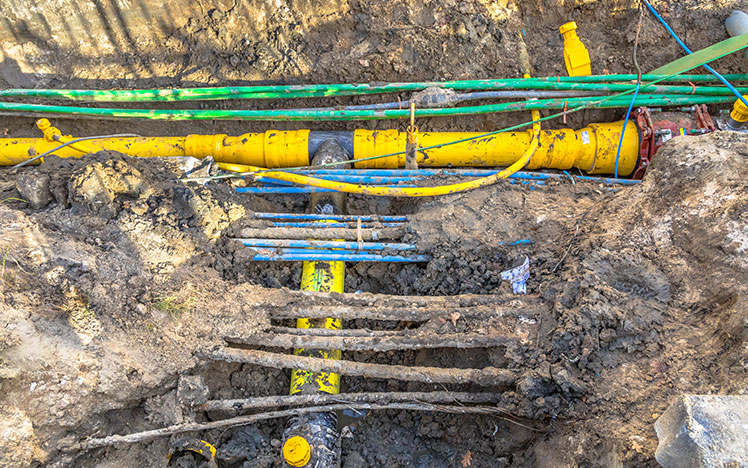
| Natural gas pipelines that are exposed during construction activities can shift, separate, or be damaged when they are not adequately supported by the soil around them, so protecting them is critical. |
Order our FREE worker safety kit on the Unitil
e-SMARTworkers website. |
|
|
|
|
| Properly supporting and protecting natural gas pipelines ensures their continued safe operation and helps protect your crew and the public from the very serious risk of a fire or explosion. |
| There are several ways to safely support exposed pipelines. The best method for your job site depends on the type and condition of the pipeline, the depth of construction activity, and the nature of the surrounding soil. Contact Unitil at 888‑301‑7700 for assistance if you have questions about the best way to support a pipeline at your job site. |
|
|
| Work Carefully Around Exposed Pipelines |
| Once pipelines have been safely supported, exercise caution when working around them: |
| • |
Do not walk on, climb on, strike, or attempt to move exposed pipelines. Even a slight impact or load can separate pipeline joints, damage protective coatings, or destabilize supports. |
|
| • |
Protect the pipeline’s coating. The coating on the pipeline is critical to preventing corrosion. Any wooden beams in contact with the pipeline must be structurally sound and free of nails, and they must be removed prior to backfilling. Cover or pad any support material with dense rubber or polyurethane padding. |
|
| • |
Supporting slings must be made from nylon and in good condition. Each sling must be properly rated for the load. All slings must be carrying equal loads at intervals no greater than the maximum allowed span of unsupported pipe. |
|
| • |
Do NOT weld or do other work involving open flames in the vicinity of exposed gas pipelines without the consent of Unitil and implementation of safeguards required to ensure the integrity of plastic pipes and protective coatings. |
|
| • |
Assure that all backfill materials are free of rocks, concrete, and sharp objects. |
|
|
| Report All Damages |
| Even a slight gouge, scrape, or dent to a pipeline or its coating may result in eventual corrosion and cause a break or leak in the future. Any damage to the tracer wire attached to or running alongside the pipe could make it impossible for locators to find the pipeline in the future. Check the pipeline regularly for nicks, dents, or other damage. When your excavation work is complete and before you backfill around the pipeline, check it again. Report any damage to Unitil so crews can inspect the line and make the necessary repairs. |
| If you suspect a gas leak, report the incident to 911, Unitil, and your supervisor immediately. Excavators are required by law to call 911 in the event of escaping gas. |
| Would You Like to Know More? |
| Additional utility safety tips, case studies, instructional videos, and educational tools can all be found, at no charge to you, on Unitil’s e-SMARTworkers website. |
|